The Races
The Isle of Man TT Races
What the TT is: time trial road racing on closed public roads, the classes from Superbike to Sidecar, the Senior TT, and how race week is run.
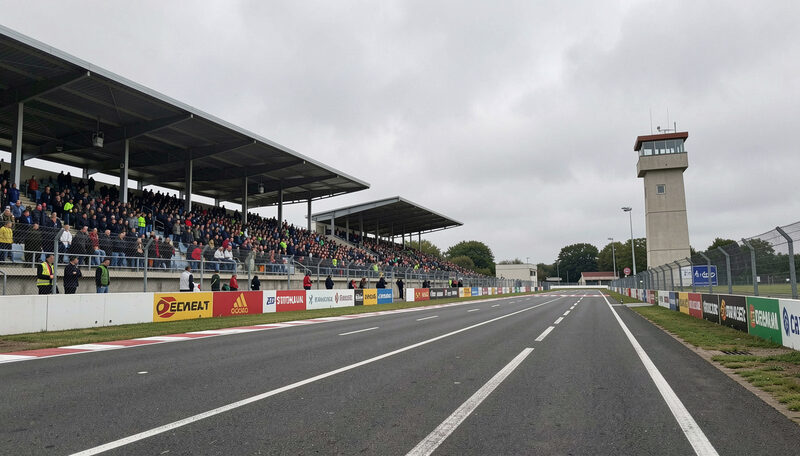
The Isle of Man TT is a motorcycle race held on closed public roads, and its format is unlike that of a Grand Prix. It is a time trial rather than a mass-start race, it is run over several days rather than a single afternoon, and it is measured in minutes and seconds across 37.73 miles rather than in laps of a short circuit. This guide explains what the TT is as a competition, which classes race, and how the fortnight is organised.
A time trial on public roads
In a mass-start race, the whole field leaves together and the winner is the first across the line. At the TT, riders leave the start line at intervals of a few seconds and race against the clock. The winner is the rider with the shortest total time over the race distance, which is why the event is followed with timing screens as closely as with eyes.
The time trial format suits a road circuit, because the course is narrow and a full field starting together would be impossible to manage. It also means that the fastest rider on the day is not always the winner, since a single mistake in a slow corner can cost more than a brilliant run through a fast one.
The classes
The TT meeting includes several classes, each raced separately. Superbike and Superstock machines are the fastest and most powerful, and they race over the greatest distance. Supersport and Sportbike machines are lighter and closer to production specification. Sidecars race in their own class, with a driver and a passenger, and they are among the most spectacular machines on the course.
The exact class list has changed over the years as regulations and manufacturer interest have shifted, and the organisers publish the current schedule each season. What has not changed is the range of machinery on the course at the same meeting: a spectator can watch a 200 mph superbike and a sidecar outfit within the same week.
The Senior TT
The Senior TT is the blue riband race of the meeting, run over six laps of the Mountain Course, a distance of about 226 miles. It closes the event, and it is the race every rider wants to win. The Superbike TT is also run over six laps, while the Supersport, Superstock, Sportbike and Sidecar races are usually run over three.
Because the Senior is the last race, it carries the accumulated tension of the fortnight. Weather, machine reliability and rider fitness all matter, and a race of that length is as much an endurance test as a sprint. The official schedule and results are published by the organisers at iomttraces.com.
Practice week and race week
The meeting runs over roughly two weeks. The first week is given to practice and qualifying, with sessions held in the morning, afternoon or evening depending on the day and the weather. Riders use these sessions to learn the course, set up their machines and record a qualifying time. Newcomers are taken round in a controlled lap before they join the faster sessions.
The second week is race week, with races on several days and rest days in between. The event usually ends with the Senior TT on the final Saturday. Practice and race sessions are subject to road closures, which are covered in the guide to watching the TT.
How a lap becomes a race result
Each rider starts from the Grandstand on Glencrutchery Road, completes the required number of laps, and finishes at the same place. Times are recorded at the start and finish and at points around the course, and the classification is built from the total time. A rider who retires, or who is delayed by a mechanical problem, loses the time permanently.
That structure makes the course itself the main opponent. The Mountain Course is documented in detail in the guide to the Snaefell Mountain Course, and its named corners are listed in the index of named corners of the Mountain Course. A race result is simply a record of how each rider dealt with 37.73 miles of public road, repeated three or six times.
The other races on the same roads
The TT is not the only event on the Mountain Course. The Manx Grand Prix and the Classic TT are held on the same roads later in the year, and they are covered in their own guide. The Southern 100 is run on a shorter closed road circuit at Billown, in the south of the island, and club and historic meetings use the course at other times.
The relationship between the TT and the Manx Grand Prix is part of the history of road racing, and it is explained in the guide to the Manx Grand Prix and the Classic TT. The story of the TT itself, from the first race in 1907 to the present day, is told in the guide to the history of the TT.
For a newcomer, the TT is best understood as a meeting rather than a single race: a fortnight of practice and racing, several classes, one long blue riband event, and a course that is closed for the purpose and returned to ordinary traffic afterwards. Everything else about the event follows from those facts.
One consequence of the format is worth spelling out for a first-time follower. Because riders start at intervals, the leader on the road is not necessarily the leader of the race. A rider who started earlier may be ahead physically while a faster rider behind is closing on time. That is why the timing screens matter as much as the road, and why a race can appear to change hands without a single overtake. Following a TT race means following two things at once: the machines passing in front of you, and the numbers on the board.
The Races
A Short History of the TT
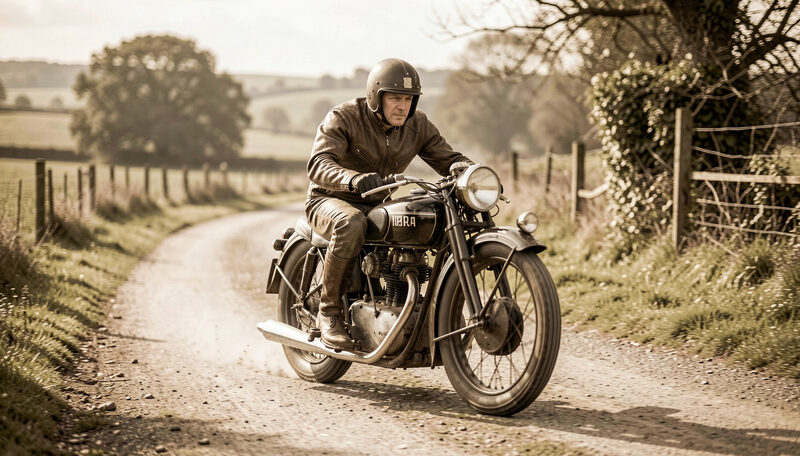
From the first race at St John's in 1907 to the Mountain Course and the modern era: how the Tourist Trophy became the most famous road race in the world.
From St John's in 1907 to the mountain and the modern era.
The Races
The Manx Grand Prix and the Classic TT
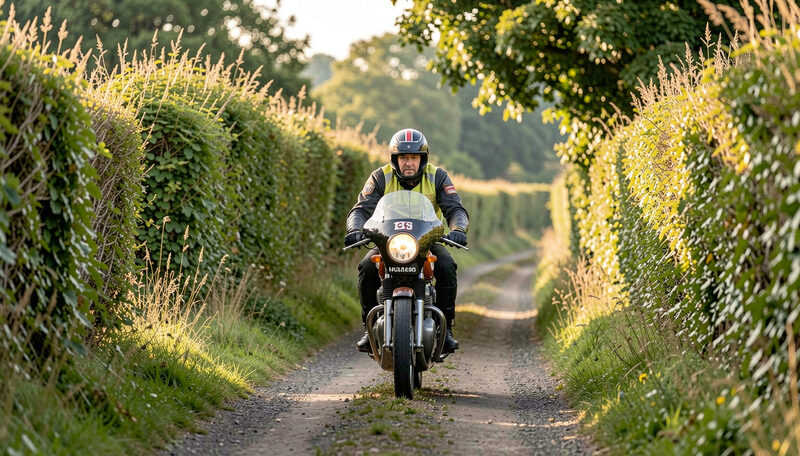
The Manx Grand Prix, run since 1923 as the amateur road race on the Mountain Course, and the Classic TT: the September festival and its place in racing.
The clubman race that has shared the course since 1923.