The Races
The Manx Grand Prix and the Classic TT
The Manx Grand Prix, run since 1923 as the amateur road race on the Mountain Course, and the Classic TT: the September festival and its place in racing.
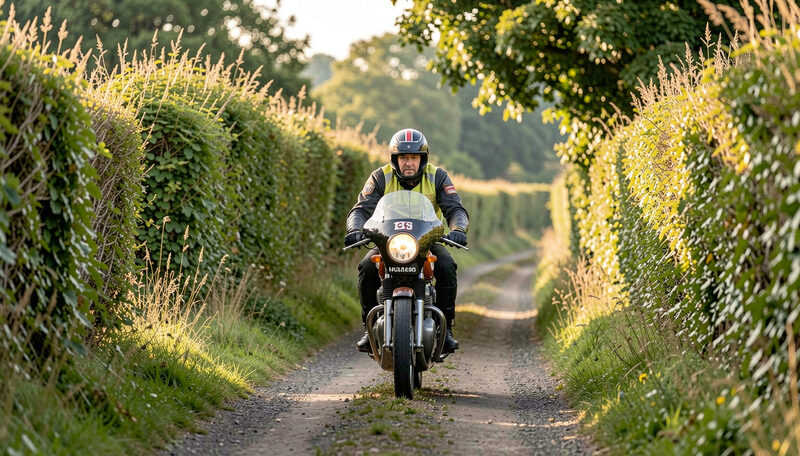
The Manx Grand Prix is the other great road race on the Isle of Man, and it has been run on the Mountain Course since 1923. It began as a race for amateurs at a time when professional teams dominated the TT, and it has kept that character ever since: a meeting for clubman riders, many of them taking their first steps toward the TT itself. This guide explains where it came from, how it works, and what it offers a spectator.
An amateur race for a professional era
The Manx Motor Cycle Club proposed a race for amateur and private riders in the early 1920s, at a time when factory teams and professional riders were winning almost everything at the TT. The idea was to give riders who did not have works backing a race of their own, on the same course and in front of the same crowds.
The first event was held on 20 September 1923 under the name Manx Amateur Road Races. It was run over five laps of the Mountain Course, one lap fewer than the TT of the period, and it attracted a field of a few dozen starters. The winner was Les Randles on a 500cc Sunbeam, at an average speed of just over 50 mph.
From amateur race to Manx Grand Prix
The early races were dogged by arguments about what counted as an amateur, and several riders were disqualified under rules that proved hard to interpret. In 1930 the event was renamed the Manx Grand Prix and the rules were changed so that experts were barred rather than amateurs defined. A competitor could not have ridden in an international road race or held a motorcycle world record.
The meeting expanded through the 1930s with the addition of a Lightweight class, and it resumed after the Second World War in 1946. Newcomer races were reintroduced in the late 1970s and became a permanent part of the programme, and classic classes first appeared in the 1980s. The hundredth anniversary of the event was celebrated in 2023.
How the Manx Grand Prix works today
The Manx Grand Prix is held at the end of August and the beginning of September, and it uses the same 37.73 mile Mountain Course as the TT. The format is familiar to anyone who follows the TT: practice and qualifying sessions followed by race days, with road closures around each session.
The event is traditionally a place for riders to learn the course before attempting the TT, and its classes are aimed at clubman competitors rather than factory teams. Regulations limit the machinery, which keeps the racing close and the costs within reach of private entrants. The course itself is described in the guide to the Snaefell Mountain Course, and the closures work in the same way as at the TT, as explained in the guide to watching the TT.
The Classic TT and the historic classes
For several years the meeting included a separate Classic TT, run alongside the Manx Grand Prix and devoted to historic machinery. The classic classes have since been folded into the Manx Grand Prix programme, so that a single meeting now covers both modern clubman racing and historic machines.
The historic element is one of the reasons the meeting appeals to spectators who follow the older side of the sport. A classic machine on the Mountain Course sounds and behaves differently from a modern one, and the racing puts the history of the course on display rather than only describing it. The story of the TT itself is told in the guide to the history of the TT.
What it offers a spectator
The Manx Grand Prix has a different atmosphere from the TT. It is smaller, less crowded and less commercial, and the crowds at the popular corners are thinner. For a visitor who wants to stand at Creg-ny-Baa or the Gooseneck without the press of a TT race day, the September meeting is often the better choice.
It is also a chance to watch riders who are still building their careers. Many of the competitors are learning the course in the same way that newcomers to the TT do, and the racing reflects that mix of ambition and inexperience. The event is documented in detail at Wikipedia, and the racing programme as a whole is explained in the guide to the TT races.
The meeting has also changed its shape over the years. It was traditionally staged over two weeks, and the programme was shortened in 2022 to a shorter run of days. Practice and qualifying still precede the races, and the road closures still follow the same pattern as at the TT. The classes have shifted with the regulations, but the event has kept its identity as a meeting for privateers and clubman riders rather than factory teams.
That identity has practical consequences. Because the machines are more closely regulated and the budgets are smaller, the margins between riders are often narrower than at the TT, and the racing can be closer as a result. A spectator who watches both meetings will notice the difference in pace, but not in commitment.
Why the meeting matters
The Manx Grand Prix is sometimes treated as a footnote to the TT, but its role in road racing is larger than that. It is where a significant number of TT riders first learned the Mountain Course, and it is the event that kept the amateur side of road racing alive when the professional championships moved elsewhere.
Its name also carries the history of the island. Manx is the adjective for the Isle of Man and its people, and the meeting is one of the ways the island presents its own identity to the world. For a spectator who has watched the TT and wants more, the Manx Grand Prix is the natural next step.